 ≥99% Purity
 Third-Party Tested
 COA Available
 U.S.-Based
 Research Use Only
Blog
How to Choose a Research Peptide Supplier: 2026 Buyer’s Guide

Last updated: July 2026 | 9-minute read
Choosing a research peptide supplier is harder than it should be. The market is crowded with vendors making similar claims: “research-grade quality,” “third-party tested,” “99%+ purity.” However, when you dig into the documentation, the differences become obvious. For instance, some suppliers provide batch-specific Certificates of Analysis from independent labs. Others, by contrast, provide vague manufacturer claims. And in many cases, some provide nothing at all.
This guide, therefore, walks you through how to evaluate any research peptide supplier, what questions to ask, and what red flags mean you should walk away.
Why Research Peptide Supplier Selection Matters
In research, the quality of your compound directly dictates the reliability of your results. Specifically, if the peptide you’re studying isn’t what the label claims, if purity is overstated, if it’s contaminated, or if it’s the wrong compound entirely, your research outcomes are compromised.
This isn’t theoretical. In fact, quality issues in the peptide market are well-documented and common:
- Peptides labeled as ≥99% pure that test at 70-85% purity when independently analyzed
- Contamination with heavy metals, bacterial endotoxins, or fentanyl
- Mislabeled products (what’s sold as BPC-157 is actually a different peptide)
- Degraded peptides due to improper storage or shipping
Consequently, choosing the right research peptide supplier isn’t about finding the lowest price. Instead, it’s about finding verifiable quality, transparent testing, and accountability.
The 7 Questions to Ask Any Research Peptide Supplier
Here’s how to evaluate any research peptide supplier in 2026.
1. Does the Research Peptide Supplier Provide Third-Party Certificates of Analysis?
A Certificate of Analysis (COA) is a laboratory document that tells you what’s in your peptide vial: the compound identity, purity percentage, testing method, and whether it passed quality standards. However, not all COAs are equal. Here’s what a real COA looks like. Additionally, the A2LA accreditation directory lets you verify any lab independently before you trust their documentation.
What to look for:
✅ Third-party lab testing:
- The COA is issued by an independent, accredited laboratory
- The lab has no financial relationship with the manufacturer or supplier
- The lab name is verifiable — you can look them up online and confirm accreditation
❌ Manufacturer self-testing:
- The COA is issued by the same company that made the peptides
- This is self-certification, not independent verification
- It’s the equivalent of grading your own homework
✅ Batch-specific documentation:
- Each batch (lot number) has its own COA
- The COA lot number matches the vial label
- COAs are updated regularly as new batches are produced
❌ Generic or recycled COAs:
- One COA used for multiple batches
- No lot numbers listed
- COA is months or years old
✅ Publicly accessible:
- COAs are linked directly from product pages
- You can download and verify them before purchasing
- No need to “request” COAs after you’ve already bought the product
❌ Available “upon request” only:
- You have to email the supplier to get a COA
- COAs are only provided after purchase
- This suggests the supplier doesn’t want COAs scrutinized before the sale
At Bluebonnet Peptides, every product page links directly to its corresponding batch-specific COA. The lab name, accreditation, and lot number are all verifiable before you purchase.
2. What Purity Standards Does the Research Peptide Supplier Meet?
Purity percentage tells you how much of the sample is the target peptide versus impurities, degradation products, or other compounds. Research-grade standard is ≥99% purity.
What to look for on the COA:
✅ HPLC testing:
- Testing method listed as “HPLC” or “RP-HPLC” (Reverse-Phase High-Performance Liquid Chromatography)
- HPLC is the gold standard for peptide purity analysis
- Chromatogram (visual graph) should be included
✅ Purity ≥99%:
- Research-grade peptides should be at least 99% pure
- Lower purity means more impurities, which can affect research outcomes directly
✅ Mass spectrometry confirmation:
- Mass spec confirms the molecular identity of the peptide
- Verifies you’re getting the correct compound (e.g., BPC-157 and not a different peptide)
Red flags:
❌ No testing method listed: If the COA doesn’t say how purity was measured, therefore, it’s not verifiable.
❌ Purity below 95%: Research-grade peptides shouldn’t fall below 99%. Consequently, if a supplier sells 90% or 85% purity peptides, they’re not research-grade.
❌ Vague claims: “High purity” or “pharmaceutical-grade” without specific percentages is marketing language instead of data.
3. Does the Research Peptide Supplier Test Every Batch?
Batch-to-batch consistency is critical in research. For example, one batch might be 99% pure while the next tests at 85%. The only reliable way to know is to test every batch independently.
What to ask:
- Does the supplier send every batch to a third-party lab, or do they spot-check random batches only?
- How often are COAs updated? Are they current (produced within the last 3-6 months)?
- Can you verify that the lot number on your vial matches the COA exactly?
Red flags:
- ❌ One COA used across multiple production runs with no way to verify your specific batch
- ❌ COAs dated months or years ago that don’t prove current batches meet the same standards
- ❌ No lot numbers on vials, making it impossible to match the COA to your product
4. Do They Test for Contaminants?
Purity testing tells you how much of the sample is the target peptide. Contamination testing, however, tells you what else might be in there. Here’s how third-party peptide testing works in full.
Critical contamination tests:
✅ Fentanyl screening:
- Fentanyl has been detected in research chemicals sourced from unverified manufacturers
- A fentanyl screen is simple and inexpensive
- Its presence on the COA shows the supplier prioritizes safety
✅ Heavy metals testing:
- Lead, mercury, arsenic, cadmium
- Common in peptides produced in facilities with poor quality control
✅ Bacterial endotoxin testing:
- Endotoxins from bacterial contamination can affect research outcomes
- Measured in endotoxin units (EU/mg)
Red flags:
- ❌ No contamination testing — suggests the supplier hasn’t considered safety risks
- ❌ Contaminants detected but not disclosed
5. Are Products Properly Labeled Research Use Only?
Research Use Only (RUO) is a regulatory designation. It means the product is intended for laboratory research and scientific study, not for human consumption, veterinary use, or therapeutic applications. Learn what RUO actually means.
What to look for:
- ✅ Product vials labeled “For Research Use Only”
- ✅ Website includes RUO disclaimers on all product pages
- ✅ Marketing language focuses on research applications, not health benefits
- ✅ No therapeutic claims of any kind
Red flags:
- ❌ Language like “supports healing,” “accelerates recovery,” or “anti-aging benefits” — these claims violate RUO designation
- ❌ Before/after photos or testimonials about personal results
- ❌ Dosage advice for human use
- ❌ No RUO disclaimer on the website at all
6. What’s Their Shipping and Storage Protocol?
Peptides are sensitive to temperature and light. As a result, improper shipping or storage degrades the product before it even reaches you.
What to look for:
- ✅ Peptides shipped with ice packs or cold packs in insulated packaging
- ✅ Clear storage guidance for both unopened and reconstituted peptides
- ✅ Storage temperature ranges specified (e.g., -20°C for long-term storage)
- ✅ Orders shipped within 1-2 business days to minimize transit time
Red flags:
- ❌ Peptides shipped in regular envelopes or boxes with no temperature control
- ❌ No storage instructions provided
- ❌ Slow fulfillment with orders sitting for days before shipping
7. Does the Research Peptide Supplier Offer Transparency and Support?
Trustworthy suppliers are transparent about their testing, sourcing, and processes. Moreover, they answer questions clearly and provide documentation without hesitation.
What to look for:
- ✅ COAs linked from product pages with no need to request them via email
- ✅ Lab name, accreditation, and contact information are provided and independently verifiable
- ✅ Questions about testing, storage, or COAs are answered promptly
- ✅ Blog posts, guides, or FAQs that explain RUO, COAs, and testing methods
Red flags:
- ❌ Questions about testing or sourcing are deflected or ignored
- ❌ No email address, phone number, or contact form available
- ❌ No educational content about RUO, COA reading, or peptide storage
Red Flags: When to Walk Away from a Research Peptide Supplier
Here are the deal-breakers. If you encounter any of these, don’t purchase from that research peptide supplier.
🚩 No COA provided
If a supplier doesn’t offer a COA, or only provides one “upon request” after purchase, walk away. In 2026, batch-specific COAs should be standard practice, not an afterthought.
🚩 Manufacturer-provided testing only
If the COA is issued by the same company that made the peptides, it’s not independent verification. Instead, it’s self-certification — a company grading its own homework.
🚩 Missing or vague testing methods
If the COA doesn’t specify HPLC, mass spec, or other testing methods, there’s no reliable way to verify the data.
🚩 Purity below 95%
Research-grade peptides should be ≥99% pure. Consequently, anything below 95% isn’t suitable for serious research work.
🚩 No lot numbers or mismatched lot numbers
If the COA doesn’t have a lot number, or the lot number doesn’t match your vial, the document most likely doesn’t correspond to your batch.
🚩 Therapeutic or health claims
If the supplier markets peptides with therapeutic language, they’re not operating within RUO compliance. This is both a regulatory and a quality red flag.
🚩 Suspiciously low pricing
Legitimate third-party testing, ISO manufacturing, and quality control cost money. Therefore, if a supplier’s pricing is 50-70% lower than competitors, corners are being cut somewhere — usually in testing or purity.
🚩 Poor communication
If the supplier is evasive, slow to respond, or can’t answer basic questions about their COAs or testing process, don’t trust them with your research.
What “Research-Grade” Actually Means
“Research-grade” gets thrown around as marketing language. In reality, however, it has a specific meaning that every researcher should understand.
True research-grade peptides include:
- ≥99% purity verified via HPLC
- Identity confirmed via mass spectrometry
- Batch-specific third-party testing for every production run
- Contamination screening for fentanyl, heavy metals, and endotoxins
- Proper RUO labeling with no therapeutic claims
- Temperature-controlled storage and shipping
Not research-grade:
- Manufacturer self-testing only
- Purity below 99%
- No batch-specific COAs
- No contamination testing
- Marketed with health benefits or therapeutic claims
How Bluebonnet Peptides Approaches Research Peptide Supplier Standards
At Bluebonnet Peptides, transparency is the baseline. Every batch of BPC-157, TB-500, and our full Recovery Research range goes through the same process:
- Peptides are manufactured at ISO-certified facilities
- Every batch is then sent to an independent, accredited third-party lab
- HPLC confirms ≥99% purity
- Subsequently, mass spectrometry confirms molecular identity
- Fentanyl screening confirms no contamination
- Finally, the batch-specific COA is published and remains publicly accessible
We don’t ask you to trust us. Instead, we provide the data so you can verify independently.
Final Thoughts on Choosing a Research Peptide Supplier
Choosing a research peptide supplier isn’t about finding the cheapest price or the flashiest marketing. Instead, it’s about finding verifiable quality, batch-to-batch consistency, and transparent documentation.
Third-party testing isn’t optional. In fact, it’s the baseline. In research, you can’t afford to wonder whether the compound you’re studying matches its label. As a result, independent verification removes that question entirely.
Same peptide name. Very different suppliers. It’s worth knowing the difference.
Additionally, if you want to go deeper on specific topics, the related reading below covers the key areas in detail:
- What Is a Certificate of Analysis?
- BPC-157 Research Guide: Quality Standards
- Research Use Only: What It Actually Means
- Third-Party Peptide Testing: HPLC, Mass Spec & What Actually Matters
Research Use Only · Not for Human Consumption · Educational Purposes Only
Bluebonnet Peptides provides research-grade peptides to qualified investigators and institutions. All products are for laboratory research use only and are not intended for human consumption, veterinary use, or therapeutic applications.

Related posts
Third-Party Peptide Testing | HPLC, Mass Spec & Lab Verification
How to Choose a Research Peptide Supplier: 2026 Buyer’s Guide
BPC-157 Research Peptide: Complete Quality Guide for 2026
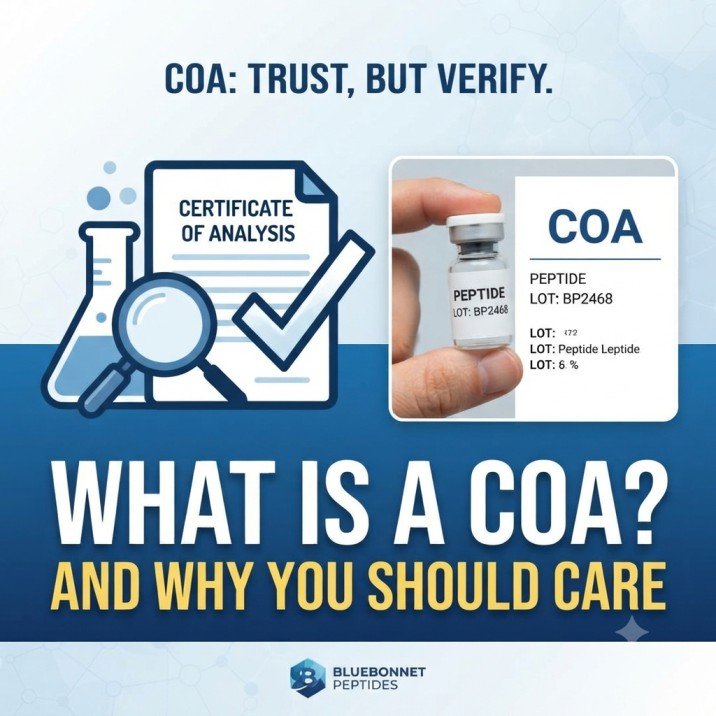
Certificate of Analysis | What a Real COA Looks Like
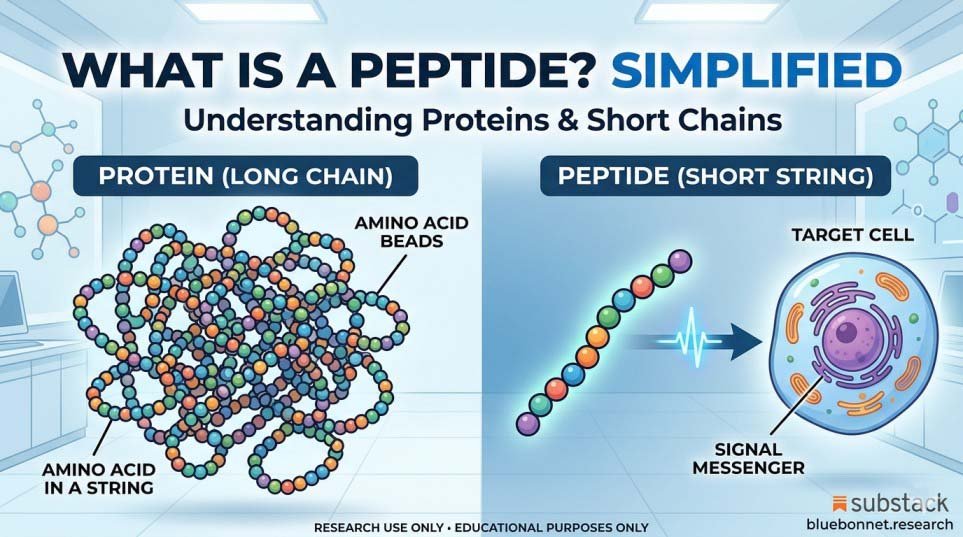
Nobody Explained Peptides to Me Either. So Here’s My Best Shot
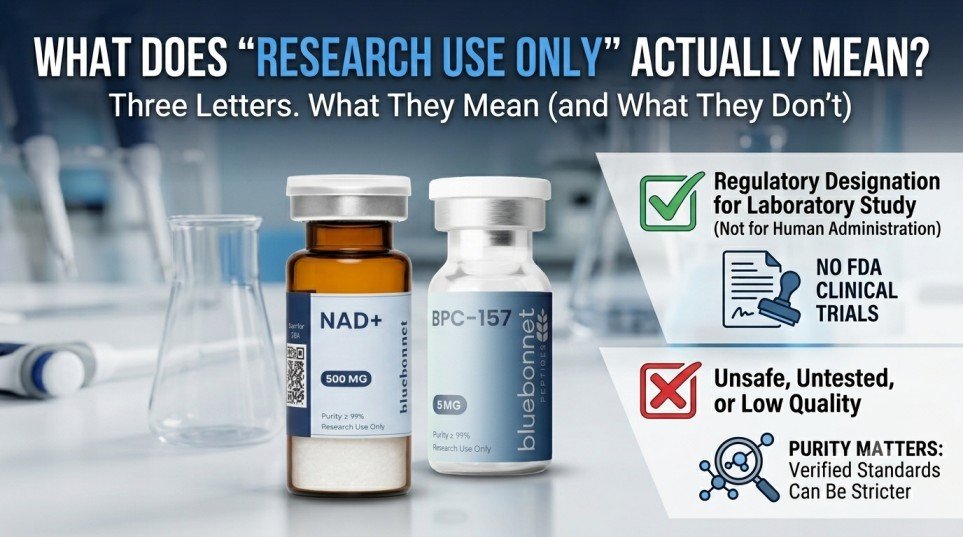
Research Use Only | Bluebonnet Peptides
Product categories
Top rated products
-
 Ipamorelin CJC-1295 / IPA Rated 5.00 out of 5$75.00
 -
 DSIP
$40.00
DSIP
$40.00
-
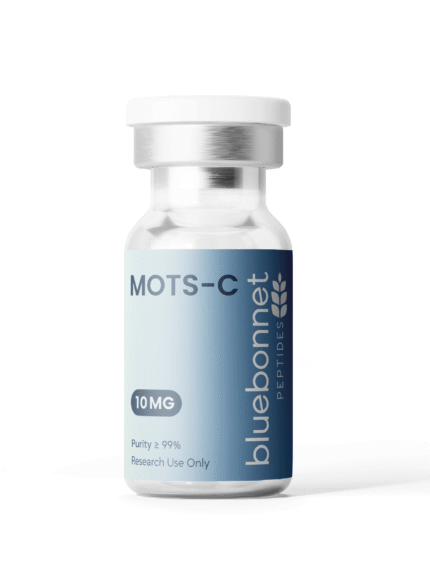 MOTS-C
$60.00 – $160.00Price range: $60.00 through $160.00
MOTS-C
$60.00 – $160.00Price range: $60.00 through $160.00