Last updated: July 2026 | 4-minute read
If you’ve ever wondered what are peptides and felt too embarrassed to ask, you’re not alone.
The first time I came across the word peptide, everyone in the conversation seemed to already know what they were talking about. I didn’t want to ask. I just kept nodding along and then spent forty-five minutes googling it afterward.
If that sounds familiar, this one’s for you.
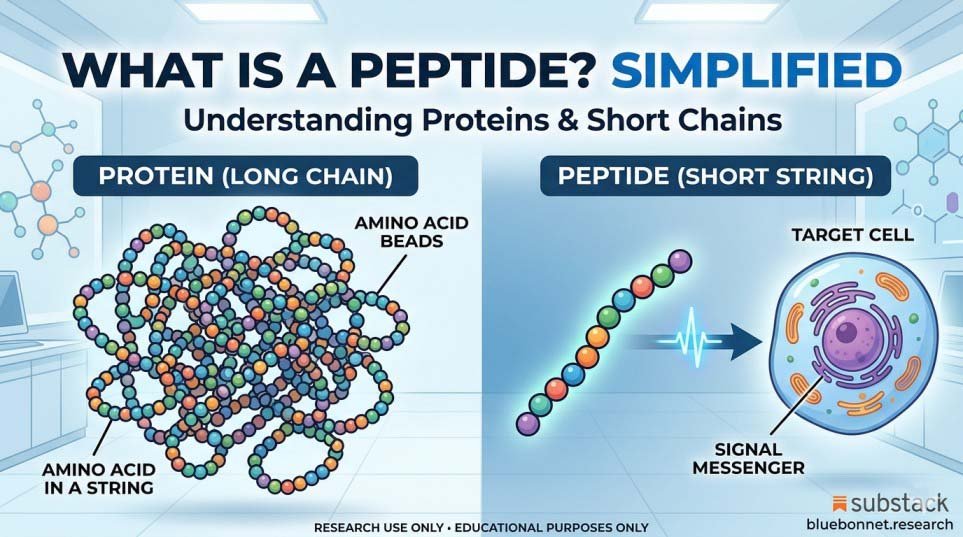
Your body is basically a machine that runs on proteins. Proteins do everything. They build muscle, heal wounds, carry signals from one cell to another. And proteins are made of smaller pieces called amino acids, linked together like beads on a string.
A peptide is just a shorter version of that string.
That’s it. Proteins are long chains. Peptides are short ones. Two to fifty amino acids, roughly. The distinction sounds simple because it is.
But here’s why it matters: shorter chains behave differently. They’re more targeted. They can act like tiny messengers, telling specific cells to do specific things. Your body already makes them naturally. Researchers are trying to understand exactly how those signals work and what happens when you study them in a lab setting.
So, What Are Peptides in Practice?
Some of the peptides being studied right now are compounds your body already produces. GHK-Cu exists naturally in your blood. BPC-157 comes from a protein in your stomach lining. Researchers didn’t invent these. They found them, figured out how to replicate them, and started asking questions.
The answers are still being worked out. Most peptide research has been done in cell studies and animal models, which is how all early science works, but it also means we’re not at the finish line yet. I think that’s worth saying plainly. The NIH maintains an open database of ongoing peptide research if you want to go deeper.
That’s the foundation of what are peptides and everything else builds on top of it.
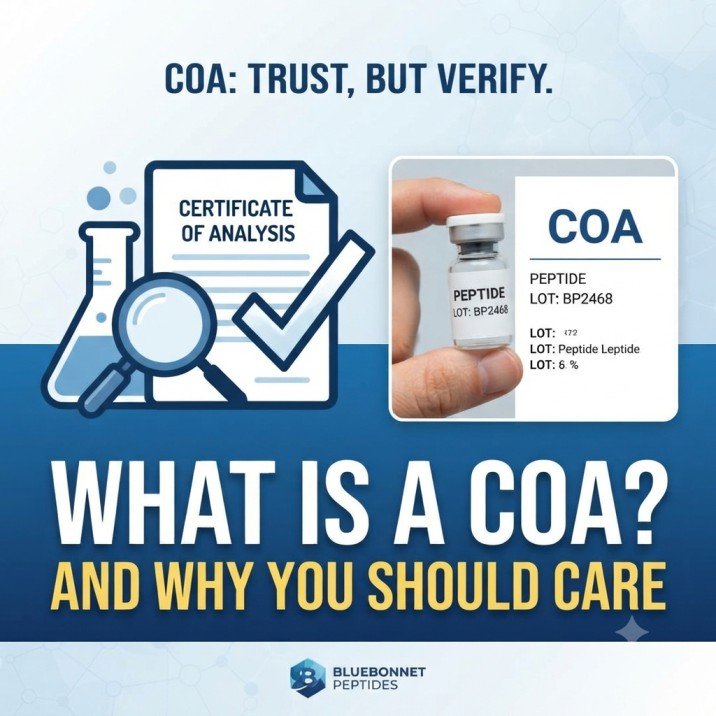
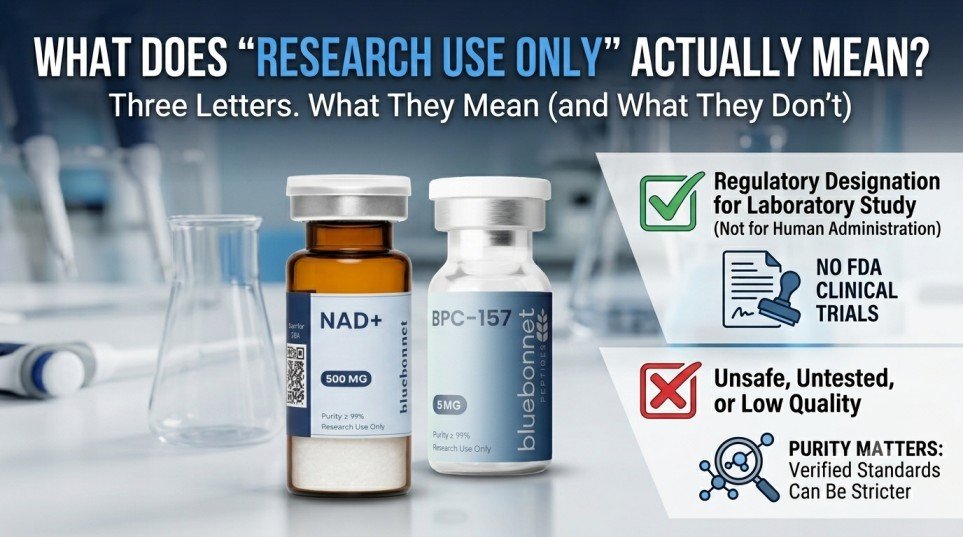
If you want to understand how these compounds are regulated for research, the next post covers exactly that. What Research Use Only actually means is worth reading before you go any further. And if you’re wondering how to verify what’s actually in a vial, the COA post covers that. Two of the most studied examples right now are BPC-157 and the GLOW blend, both available in our research catalog.
More next Sunday.
Research use only · Not for human consumption · Educational purposes only
 ≥99% Purity
 Third-Party Tested
 COA Available
 U.S.-Based
 Research Use Only